The method, narrated. About 80 seconds, sound on.
Agentic healthcare intelligence
AI that reads 3D medical scans.
Stamatis is diagnostic decision support for radiology. One patented engine localizes the finding on a 3D scan, returns a calibrated confidence and a ranked differential, and routes every case to a radiologist to confirm. The same pipeline runs across brain, heart, chest, and spine, so a health system adopts one platform instead of a dozen single-finding point tools.
Issued U.S. Patent 12,665,073
Method-level U.S. patent
One engine, four body regions
Live clinical demo
HIPAA-aligned from day one
The problem
Imaging is outgrowing the people who read it
Scan volumes are climbing faster than radiologists can be trained, and the earliest, most subtle findings are the easiest to miss. Health systems need help that fits the read, not another silo.
~41,000
radiologists in the U.S., while imaging volume rises about 5% a year and training grows about 2%.
42,000
projected U.S. physician shortfall by 2033, with radiology among the hardest hit.
#1
threat to radiology named by the field's own leaders, three years running.
~35%/YR
growth in FDA-authorized imaging-AI tools since 2019, the clearest sign the pathway is open.
Sources: ACR / Neiman HPI, AAMC, U.S. FDA.
01
The method
What the engine actually does
A three stage pipeline, from the scan going in to the radiologist signing off. The animation runs it live.
Live: standardize, focus, localize, decide.
1Standardize
Any scan goes in
MRI, CT, PET, ultrasound. The engine segments the organ, normalizes the intensity, and resamples it to uniform 3D voxels, so every study starts from the same footing.
2Focus
It works out where to look
Before it classifies anything, the engine predicts where disease is most likely to be and keeps only those regions. This probabilistic masking is the heart of the patent.
3Decide
Finding, place, and a ranked differential
A dual head returns the finding and its exact location, a calibrated confidence, and a ranked list of what else it could be. If it is unsure, it flags the case for a person.
02
What it reads
One engine, four modules
The same pipeline, trained for each part of the body. It speaks in the radiologist's terms, not in placeholders.
3D MRI, post contrast
Brain
Flags enhancing lesions and ranks the likely tumor type with its exact location.
Cardiac MRI, late gadolinium
Heart
Localizes late enhancement and characterizes the myocardial pattern.
Chest radiograph, fourteen findings
Chest
Detects and ranks the common thoracic findings, from opacity to effusion.
Spine MRI, sagittal
Spine
Flags the level and ranks the likely pathology, from disc herniation to stenosis.
Illustrative examples, not validated outputs. A radiologist confirms every read.
03
How it fits the read
Stamatis is decision support. It does not replace the read. It gives the radiologist a starting point, a confidence they can weigh, and a differential they can accept or overrule.
It fits the existing radiology workflow rather than replacing it, so the value shows up as faster, more consistent reads and earlier catches, not a rip-and-replace. The radiologist signs every study, and the engine learns from what they change.
04
Security and oversight
Built to sit inside a hospital
Patient data is the most sensitive thing a hospital holds, so the engine is wrapped to treat it that way.
- EncryptionScans stay encrypted in transit and at rest.
- AccessAccess is controlled on a zero trust basis.
- AuditEvery step is written to a tamper evident audit log.
- Sign offA board certified radiologist signs every read.
- FeedbackThe engine learns from each correction a radiologist makes.
05
The patent
Granted · United States · Issued June 23, 2026
12,665,073
Protected at the method level: the standardization, the probabilistic masking that focuses compute on where disease is likely, and the dual head that returns a located finding with a calibrated confidence and a ranked differential. Most imaging AI is a single-finding point tool; protecting the method itself lets the same defensible core extend to new body regions without starting over.
Assignee · Cornerstone Eagle LLC
06
Team
Who is building it
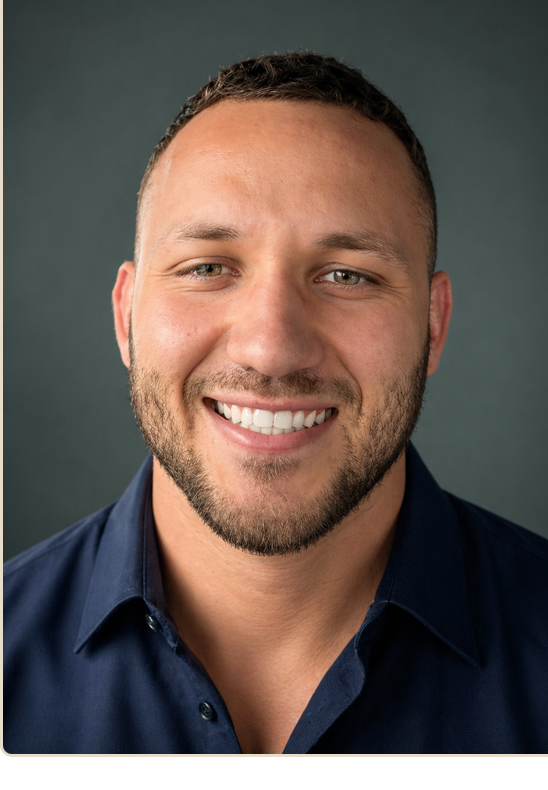
Lucas Lee Stamatis
Co-Founder & CEO
Co-inventor of U.S. Patent 12,665,073 and an SMU-trained finance professional who has built and led ventures across private healthcare. Lucas brings institutional-grade financial discipline to one of the most capital-intensive sectors in technology. He leads Stamatis.AI's commercial strategy, fundraising, and hospital-system partnerships, turning a patented imaging engine into a platform health systems can adopt and trust.

Sajed Khan
Co-Founder, CTO & CISO
Co-founder, CTO, and CISO, and a co-inventor of U.S. Patent 12,665,073. Sajed architected Stamatis.AI's three-stage probabilistic-masking pipeline and the secure, HIPAA-aligned infrastructure it runs on, with clinical-grade data integrity built in from the ground up. He brings two decades of leadership across enterprise, government, healthcare, and finance, including CISO-level roles spanning global security programs and regulatory compliance across SOC 2, HIPAA, GDPR, NIST, and CMMC. His engineering spans production AI systems, predictive analytics, and LLM-powered applications built on PyTorch, TensorFlow, and FastAPI.

Aviraj (Avi) Sinha, PhD
Co-Founder & Chief Data Scientist
PhD from Southern Methodist University spanning AI, machine learning, and quantum computing, and co-inventor of U.S. Patent 12,665,073. Avi leads the model architecture and validation strategy behind Stamatis.AI's diagnostic engine, combining classical deep learning with next-generation computational methods. A published researcher across IEEE, SPIE, and the Journal of Cyber Security Technology, his work in anomaly detection and neural-network consensus underpins the patented architecture.
Regulatory & validation
Stamatis is built to a clinical standard from day one: HIPAA-aligned infrastructure, a board-certified radiologist in the loop on every read, and a method designed around the FDA's pathway for AI-based diagnostic software.
The examples on this page are illustrative, not validated outputs. Independent clinical validation and regulatory submission are our next milestones, and we are building the evidence base alongside clinical partners.
Contact
For partners, pilots, and investors
If you run a radiology group, build imaging hardware, or back clinical AI, we should talk.